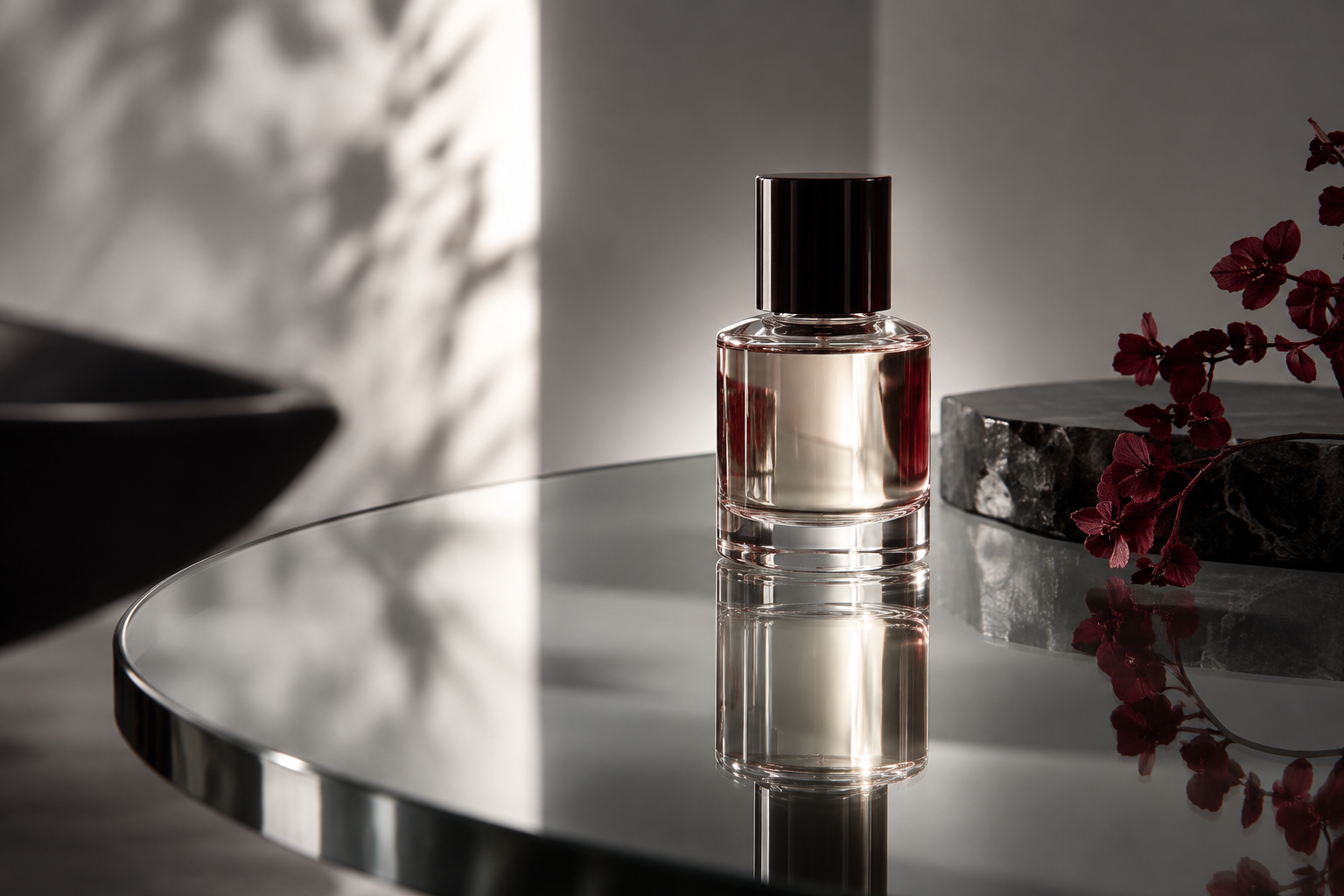
A glass surface can introduce reflections and transmitted light into a product photograph. Control what the glass reflects before adding more lights or relying on retouching.
The Polish article presents KARIROOM's Triplex table. This English guide explains the photographic approach without treating an unverified load rating, hire price or setup as a current safety specification.
Start with the desired reflection
Decide whether the reflection should be a visible part of the composition or a subtle indication of the surface. Camera height, viewing angle, background and the object itself affect what appears in the glass. Make a test with one product before building a complicated set.
Look beyond the subject. Glass may show lamps, windows, the camera or clothing worn by the crew. Move or mask unwanted reflections with a controlled arrangement of flags and diffusion. Do not assume an editing preset will remove a physical reflection problem.
Build the light in stages
Light the product first, then assess the background and any illumination transmitted through the surface. Add another source only for a clear purpose. For transparent and reflective objects, the visible shape of a diffuser can matter as much as lamp power.
A polarising filter may change some reflections, depending on the material and angle, but it is not a universal reflection-removal tool. Compare test frames and keep the image faithful to the product.
Prepare and use the surface responsibly
Clean the glass with a method approved by the venue and inspect for dust before close-up work. Ask staff to position or secure the table. Confirm permitted objects and loads directly; do not infer that a person may sit or stand on it from an old promotional photograph.
Avoid sharp objects or footwear that could damage the surface. Any unusual camera position or arrangement involving a person needs specific approval and a safe plan.
Is a glass table the same as a white shooting table?
No. A reflective or transparent surface creates different options from an opaque background, though the final result depends on the whole lighting setup.
Do I always need several lights?
For the complete workflow, read planning a product photoshoot.
Cover: editorial illustration. It does not depict an actual KARIROOM room, included equipment, client session or preset result.