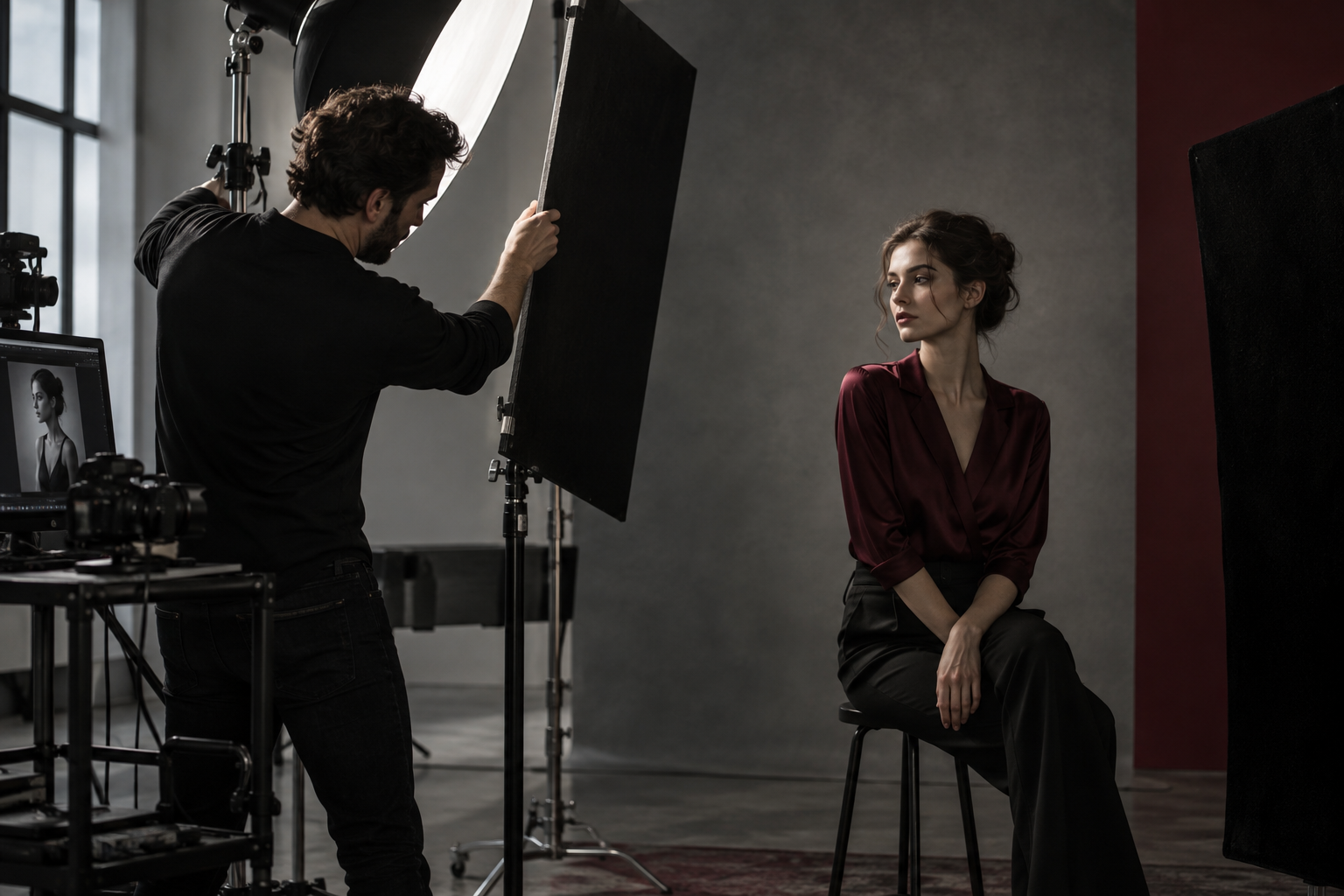
Start with one light, inspect the shadows and change one variable at a time. Add another source only when you can explain what it needs to do.
Shape the main light first
Choose the direction and height for the face or object you are photographing. A position around the side and slightly above eye level can be a starting experiment, not a rule for every portrait. Look at the actual shadow pattern as the subject turns.
The apparent size of the light relative to the subject influences shadow softness. Distance also changes how quickly illumination falls off across the scene. A large close modifier is not inherently a mistake; use it when its effect supports the photograph.
Add fill or separation deliberately
A reflector can lift shadows without introducing a second powered light. Negative fill can deepen them by reducing reflected light. A rim light may separate the subject from the background, but it is unnecessary when separation already works. Watch for bright edges that distract from the face.
Rembrandt-style, clamshell and backlit arrangements are useful exercises, but the names do not replace observation. Adjust the camera, subject and light together until the intended pattern appears.
Diagnose before changing everything
Deep eye shadows may call for changing light height or the face angle. A distracting background may need more subject separation or better spill control. Colour differences may come from mixed sources, not simply the white-balance setting. Check ambient light with the studio source off and compare a controlled test.
Do not assume hard light is always undesirable or that a softbox makes every portrait better. Decide whether the photograph needs texture, contrast, softness or a graphic shadow, then select the modifier.
Keep a repeatable record
Save a reference frame and note distances, modifier, power and camera settings. Rebuild the setup later and compare results. That exercise teaches more than collecting diagrams without testing them.
Do I need three lights?
No. One well-controlled source can be enough; additional lights solve particular problems.
Where can I find guided exercises?
Cover: editorial illustration. It does not depict an actual KARIROOM room, included equipment, client session or preset result.