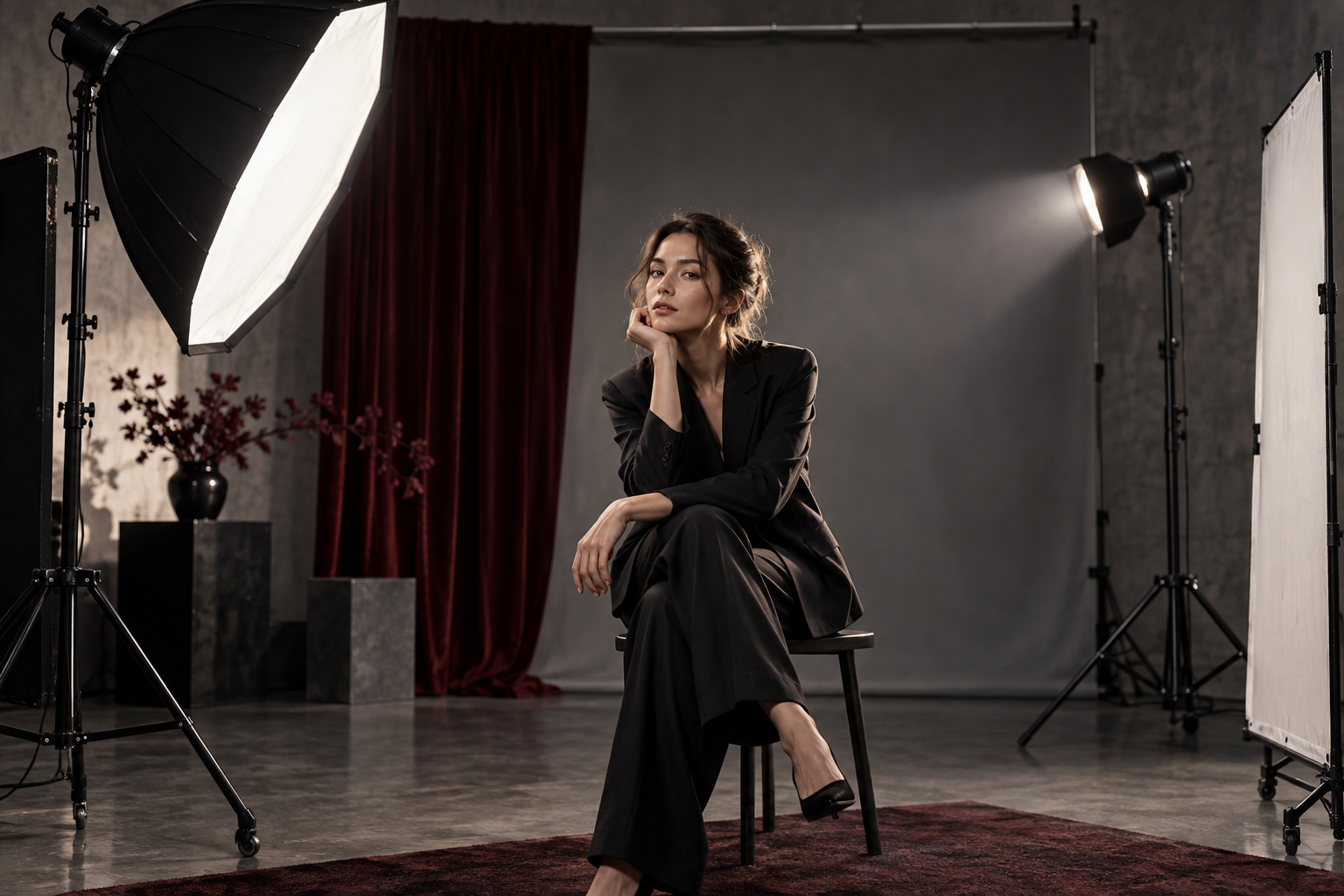
To understand studio lighting, learn what each source and modifier does, then change one variable at a time and compare the result. A reference guide is useful when it helps you connect the position of the equipment with the shadows, reflections and contrast in your photograph.
The KARIROOM Studio Lighting Encyclopedia by Karina Petkevich introduces light sources, modifiers and their roles in a setup. This article is an English adaptation of our Polish introduction to the guide. The PDF currently offered is in Polish. Its English product page does not mean that the book has been translated into English.
Start with the light, not the equipment list
Before choosing another modifier, examine what is already happening in your photograph. Where does the light come from? How defined are the shadows? How different are the bright and dark areas? Does the background receive unwanted spill?
These questions apply to daylight, continuous fixtures and flash. Equipment gives you ways to control the result, but the name of a lamp does not explain the complete appearance of a photograph. Distance, direction, apparent source size and the surrounding surfaces matter too.
The encyclopedia introduces natural and artificial sources, continuous light and flash. If you are deciding between the latter two, start with our English comparison of continuous light and flash.
Understand what a modifier changes
Softboxes, beauty dishes, stripboxes, reflectors, snoots, grids and gobos are different tools, not interchangeable shortcuts to a professional result. A useful learning exercise is to keep the subject and camera position fixed while comparing one change in the lighting arrangement.
A larger apparent source can create a softer transition at a shadow edge. A narrow source can be useful for a controlled reflection or edge of light. A grid helps restrict spill, while a flag blocks light from an area you want to keep darker. The actual result depends on how each tool is positioned and used.
Instead of memorising a list, ask what problem you are solving: a distracting reflection, a background that is too bright, flat-looking facial features or light spreading beyond the subject. Then test a change that addresses that problem.
Give each light a job
A setup is easier to understand when you can explain the purpose of each source. The main light establishes the primary direction and modelling of the subject. Fill controls how dark the shadows appear. A rim or separation light can distinguish an edge from the background, and a background light controls the background independently where the arrangement permits it.
These are roles, not a requirement to use four lamps. A reflector or a nearby wall can provide fill, and a simple portrait may need only one source. Add another light when you can describe what it contributes, not because a diagram looks more impressive with extra equipment.
Use a reference guide as a practical exercise
- Choose one idea to test, such as a softer shadow edge or less spill on the background.
- Make a baseline photograph and note the light position and camera settings.
- Change one variable: source position, distance, modifier or a flag.
- Make another photograph and compare shadow shape, exposure and reflections.
- Write down what changed and what you would try next.
Do not judge only from memory or the brightness of a camera preview. Compare the files under the same viewing conditions. Your notes become a reference for future sessions in your own space, where wall colour and room dimensions may differ from a published example.
Who is the guide for?
The encyclopedia is intended as a structured introduction and reference for people learning studio light. Beginners can use it to understand terminology and the purpose of common tools. More experienced photographers can use it to organise what they already know and plan deliberate experiments.
People collaborating on shoots, including stylists and studio teams, may also find it useful to understand how lighting choices affect the session. It is a learning aid, not a promise that reading alone will produce a particular commercial result.
You can view the Studio Lighting Encyclopedia product details on the English page. Check the language disclosure before ordering: the available PDF is the Polish edition.
Frequently asked questions
Do I need a complete professional studio to begin?
No. Start with a controllable source and a safe working space. Practise recognising direction and shadows before expanding your equipment. The needs of a particular setup may differ, so check its requirements first.
Will learning modifiers replace practising with them?
No. A description helps you plan, but the photograph shows what happens at your distance, angle and exposure. Combine reading with short, repeatable exercises.
Is this the same as the 10 Studio Lighting Setups guide?
No. The encyclopedia introduces sources, modifiers and lighting principles. The 10 Studio Lighting Setups guide is a separate product focused on example arrangements. Both currently offered PDFs are in Polish.
Where can I start with an English lighting exercise?
Try our article on three studio lighting setups for beginners. Work through one arrangement at a time and compare your results before adding complexity.